
About Us
Mohamed Nemar Abuadas Establishment is a pioneering leader in hydraulic maintenance and services in Saudi Arabia, headquartered in Riyadh.
Mohamed Nemar Abuadas Establishment is a pioneering leader in hydraulic maintenance and services in Saudi Arabia, headquartered in Riyadh.

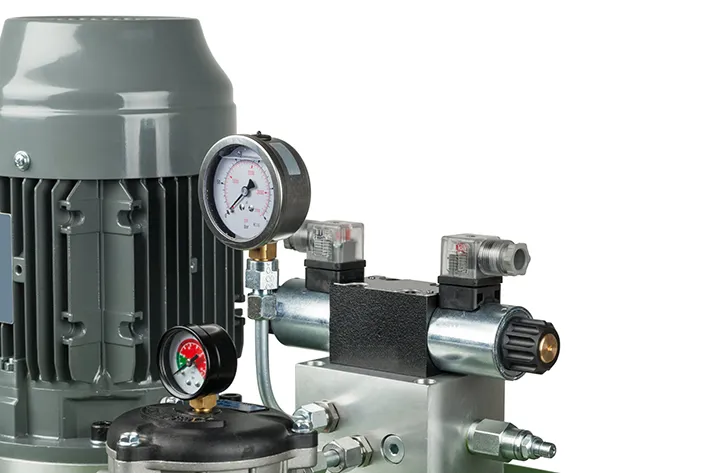
Saudi Arabia's industrial environments demand hydraulic fluids rated for sustained high-temperature operation. Selecting an ISO VG 46 or VG 68 mineral oil with the right viscosity index, anti-wear additives, and oxidation stability is critical to protecting pumps, cylinders, and valves from premature failure.
Ambient temperatures in Saudi Arabia's industrial areas regularly exceed 45–50°C during summer months. Hydraulic systems operating under load in these conditions can see fluid temperatures climb well above 80°C in the reservoir — above the threshold where most standard hydraulic oils begin to oxidise rapidly.
When oil oxidises, it loses its viscosity stability, forms sludge and varnish deposits, and loses its anti-wear additive package. The result is accelerated wear on pumps, valves, and cylinders, along with clogged filters and sticky control valves.
The thermal stress on hydraulic oil in Saudi Arabia is compounded by solar radiation on equipment and piping. Outdoor reservoirs can reach temperatures 15–20°C above ambient on sunny days. Shade structures or reflective coatings can significantly reduce fluid temperature.
Install temperature gauges on reservoirs and key circuit points. Monitor these readings regularly to establish baseline temperatures and detect abnormal heating that indicates system problems.
ISO VG (Viscosity Grade) 46 is the most commonly specified hydraulic oil globally, but in Saudi Arabia's conditions, ISO VG 68 is often more appropriate for outdoor and heavy-duty applications where reservoir temperatures remain high.
A higher VG grade maintains a thicker oil film at elevated temperatures, providing better protection for pump internals and cylinder seals. However, it also increases system pressure drop and reduces efficiency during cold morning start-ups, so the correct selection depends on your specific application.
For systems that operate in temperature-controlled environments or have cold start requirements, consider multi-grade oils or synthetic formulations that maintain viscosity across a wider temperature range.
Consult your equipment manufacturer's specifications for recommended viscosity ranges. Operating outside these ranges, even temporarily, can cause accelerated wear and reduced component life.
Look for hydraulic oils with a Viscosity Index (VI) above 100, preferably 110–120, which means the oil's viscosity changes less dramatically across the operating temperature range. High-VI oils maintain better protection across the full Saudi temperature swing — from 20°C in the morning to 80°C+ at peak operation.
Anti-wear (AW) grade additives, typically zinc dialkyldithiophosphate (ZDDP), protect metal surfaces under boundary lubrication conditions. For systems with Bosch Rexroth or HYDAC pumps, ensure the oil meets the manufacturer's specific additive compatibility requirements.
Synthetic hydraulic oils offer superior thermal stability and oxidation resistance compared to mineral oils. While the initial cost is higher, extended change intervals and reduced component wear often result in lower total cost of ownership.
Consider ester-based synthetic oils for high-temperature applications. These formulations maintain viscosity at extreme temperatures and offer excellent lubricity, though they require careful seal compatibility verification.
In desert environments, dust and silica contamination are constant threats. Select oils with good demulsibility — the ability to separate water cleanly rather than forming emulsions — so water can be drained from the reservoir regularly.
Oils with strong oxidation inhibitors extend change intervals and reduce the formation of acidic breakdown products that attack seals and metal surfaces. We recommend oil analysis every 6 months at minimum in Saudi operating conditions.
Install high-efficiency breathers with desiccant filters on reservoirs. These prevent moisture ingress while allowing pressure equalization, reducing water contamination from humid air.
Regular oil analysis should include water content measurement using Karl Fischer titration. This sensitive test detects water at levels as low as 0.02%, allowing intervention before corrosion damage occurs.
Under Saudi Arabian operating conditions, hydraulic oil change intervals should be shorter than the global standard. A general guideline: change oil every 2,000–3,000 hours of operation, or annually — whichever comes first. Systems operating in extreme heat or dusty environments may require changes every 1,000–1,500 hours.
Always conduct a fluid analysis before the scheduled change. If contamination levels are already high, change early. If the oil is still within specification, document the condition and continue monitoring.
Implement a fluid analysis program that tracks viscosity, acid number, particle count, water content, and additive levels over time. Trend analysis reveals developing problems and helps optimize change intervals.
For comprehensive maintenance guidance, refer to our article on <Link href="/blog/preventive-maintenance-hydraulic-systems">Preventive Maintenance</Link> which includes oil analysis as a key pillar of system care.
Beyond fluid selection, system design plays a crucial role in managing heat. Ensure adequate reservoir sizing — minimum 3–5 times pump flow per minute — to provide sufficient volume for heat dissipation.
Consider installing heat exchangers or oil coolers on systems that operate continuously in high ambient temperatures. Air-cooled heat exchangers are effective for most applications, while water-cooled units may be necessary for extremely high heat loads.
Insulate hydraulic lines exposed to direct sunlight. This reduces heat absorption from solar radiation and helps maintain fluid temperature within acceptable ranges.
For older systems experiencing frequent overheating issues, consider upgrading to more efficient components. Our article on <Link href="/blog/upgrading-hydraulic-power-units">Upgrading Hydraulic Power Units</Link> discusses modern pump and valve technologies that reduce heat generation.
Not sure which hydraulic fluid is right for your system? Our team can review your equipment specifications and operating conditions to make the correct recommendation.
Get a Free Consultation


Certified technicians. Genuine parts. Nationwide KSA coverage.